




<h1>Bikeways and Complete Streets</h1> <h1>Bikeways and Complete Streets</h1>

Bikeways and Complete Streets

With direction from the Regional Plan, SANDAG aims to provide transportation choices that support smart growth and sustainability. That’s why we help create bikeways and complete streets to make active transportation more convenient and give people healthy, affordable options.

Complete streets is a transportation planning and design approach that makes roads safer for all users—regardless of age, ability, or mode of transportation—and encourages environmentally friendly and healthy transportation options.

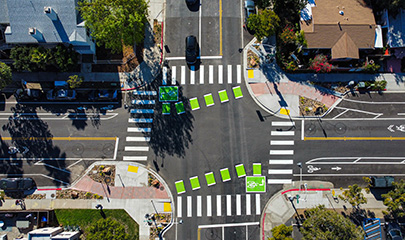
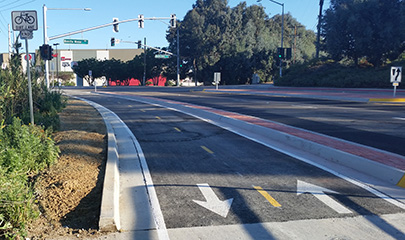
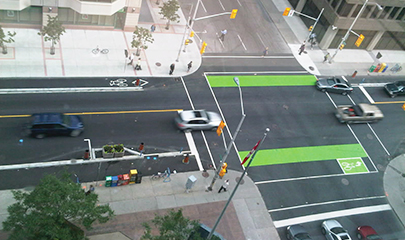
Key features of complete streets include increased crosswalk visibility and accessibility, new bus islands, on-street buffered and separated bike lanes, curb extensions, and landscaping. These projects also often include upgrades to roadways and utilities like new and improved storm drains and traffic signal enhancements.

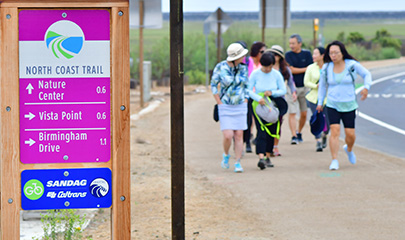
In addition to our complete streets projects, SANDAG also works on several projects focused on building off-street bikeways and walkways. The San Diego region’s extensive network of bikeways includes more than 1,800 miles of bike lanes, trails, and multiuse paths that make biking, walking, and rolling comfortable and convenient forms of everyday travel.

Frequently Asked Questions

Bike lane: A roadway lane defined by pavement markings that provide a restricted right-of-way for bicycle travel

  • Buffered bike lane: Conventional bike lane combined with painted areas that increase the distance between people on bikes and the adjacent motor vehicle travel lane and/or parking lane
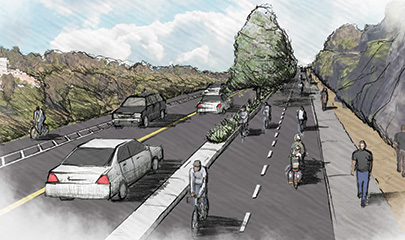
  • Separated bikeway: A bikeway for the exclusive use of bicycles that requires a vertical separation between the bikeway and vehicle lanes
  • Two-way separated bike lane: Lane that allows people riding bikes to travel in two directions on a street which may be one-way for all other vehicles

Bike route: A route located on a shared roadway that accommodates vehicles and bicycles in the same travel lane

  • Bike boulevard: A local road or residential street that has been enhanced with traffic calming and other treatments to facilitate safe and convenient bicycle travel

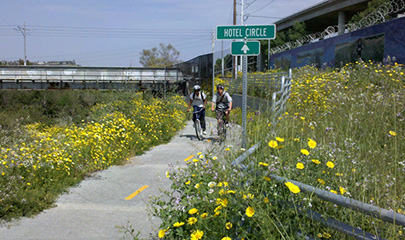
Multiuse path: A bikeway that is physically separated from vehicle traffic to accommodate bike, pedestrian, and other non-motorized traffic

Traffic calming measures: Features such as high-visibility crosswalks, curb extensions, rapid flashing beacons, mid-block crossings, traffic circles, and traffic signal enhancements that help slow vehicle traffic

The SANDAG Bike Plan Early Action Program (EAP) coordinates the planning, design, and construction of interconnected, on-street, and separated bikeways that enable residents to bike comfortably on more convenient routes within and between major regional destinations and activity centers. The Bike EAP guides the development of the regional bike network through the year 2050. Guided by the EAP, our bikeway and complete streets projects help reduce congestion, improve air quality, and enhancing public health and livability.

Two percent of annual revenues from TransNet are allocated to the Bicycle, Pedestrian, and Neighborhood Safety Program. SANDAG also maximizes funding opportunities from other sources, moving bike projects toward construction on a rolling timeline, so at any given time there would be shovel-ready projects. Your tax dollars are at work to make the bike network in the San Diego region one of the best in the nation.

Connect with Us

For more information, contact gobybike@sandag.org or 833.899.BIKE (2453).